WHAT DOES Collagen DO?
Collagen is a protein present in the human body and in most animals. It is a structure providing protein with a spiral appearance. It is found in the skin, joints and other supporting tissues. A protein consists of building blocks called amino acids. Collagen contains the typical amino acids glycine and hydroxyproline.
Collagen-rich tissues such as joints can be severely affected by certain forces during physical exertion. The search for the influence of collagen is still ongoing. A daily intake of collagen can positively support certain structural tissues in the body.
A protein consists of building blocks called amino acids. Proteins have a multifunctional role in the body. Among other things, they are responsible for transporting substances in the body, help realize certain reactions in the body, can produce substances that protect the body; are building materials for muscles, skin, hair and nails.
What DO proteins DO?
F.A.Q
How Do You Choose your Collagen Supplement?
Nowadays, many foods and supplements can be found with added collagen. But which collagen should you take?
There are different molecule sizes, processes (hydrolyzed or not) and different sources of collagen. During hydrolysis, the collagen is broken down into smaller particles (peptides) and individual amino acids. This is useful for better dissolution in liquid foods and can make absorption by the body smoother.
It is also interesting to know the country of origin and place of origin. An analysis certificate shows to what extent pollutants are present, such as cadmium, lead or other heavy metals. Look for reliable suppliers of collagen. They usually provide more certainty about the quality and the absorbability of the collagen. You can check if studies have been conducted with it and how they can support the body.
How much Collagen should a Supplement Contain?
The recommended daily amount of collagen depends on various factors such as the type of production process, the type of collagen. The recommended daily intake of hydrolyzed collagen usually varies from 2500 mg to 10000 grams. For certain types of collagen, usually type II, smaller amounts are recommended, max 1000 mg/day.
So don’t be fooled by the recommended amount! Rather check the quality, the source of the collagen, the country of production and you can check if studies have been conducted with it and how they can support the body.
Our Moovum gum contains the patented type II collagen (Cartidyss®) with a recommended daily intake between 500 mg and 1000 mg. 4 Moovum chewing gums contain 1000 mg of collagen.
Does Vegan Collagen also Exist?
Collagen is of animal origin. The most commonly used sources are beef, pork, chicken, fish. Plant-based collagen does not exist yet, only plant-based derivatives that are incorrectly called collagen. Research into alternative sources of collagen is in full swing. For example, collagen could be obtained through fermentation and offer a possible alternative. But it will take a while before it is available in Europe.
What is the Difference between Protein Supplements for Muscle Building and Collagen Supplements?
These both contain proteins but have a different amino acid (building blocks) composition.
Protein supplement
Together with a healthy protein-rich diet, protein or amino acid mixtures for athletes contribute to the growth and maintenance of muscle mass. The most complete protein supplements are of animal origin, but nowadays there are also mixes of plant sources that are almost as comfortable, but you need to take more of them.
The more muscle mass, the more proteins one needs.
A normal daily intake is 0.83 grams/kg body weight, for endurance athletes this is 1.2g/kg and for strength training the protein requirement increases even more.
The key is not to take too little and not too much protein.
Did you know that with a too high protein intake, the excess part is converted into fuel for the body. If your body doesn’t need that fuel, it is converted into fat.
Collagen Supplement
The function of collagen in the body is related to structure, strength, and elasticity of certain tissues.
The dosage of collagen supplements is typically much lower than that of proteins. You take it as an extra, in addition to a sufficient and balanced diet. Collagen supplements can be combined with other protein supplements. If you consume too few proteins and/or carbohydrates, your collagen intake will be used less efficiently.
A healthy diet for the necessary supply of minerals and vitamins is, as with all production processes in the body, important. Did you know that vitamin C is essential for the normal collagen production in the body? Minerals such as silicon and sulfur are also present in collagen-rich tissues.
The collagen concentrate in the chewing gum naturally contains sulfur. We offer bio-active silicon in a product from the ba’sil range: hair skin nail boost.
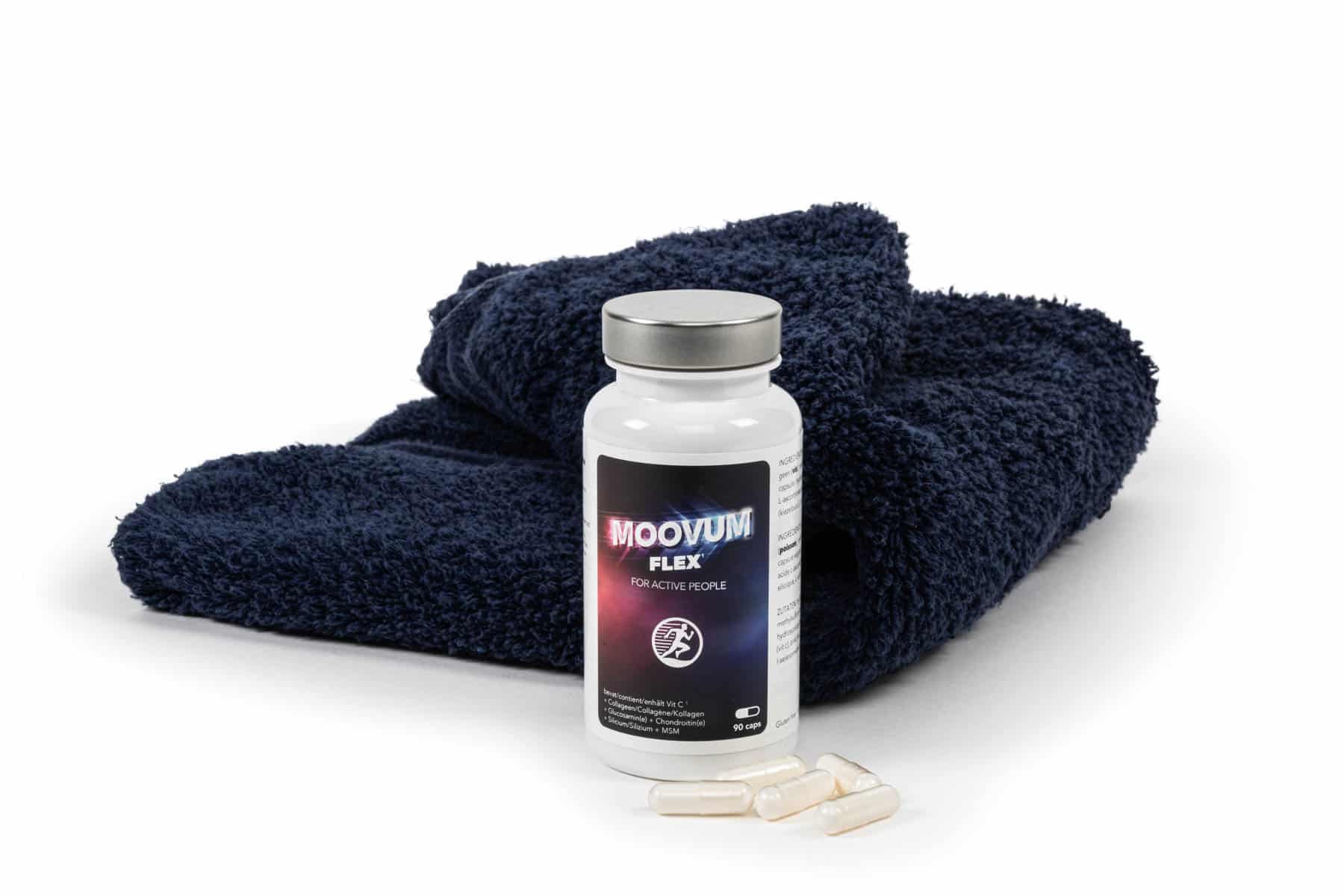
Moovum Flex
€68.95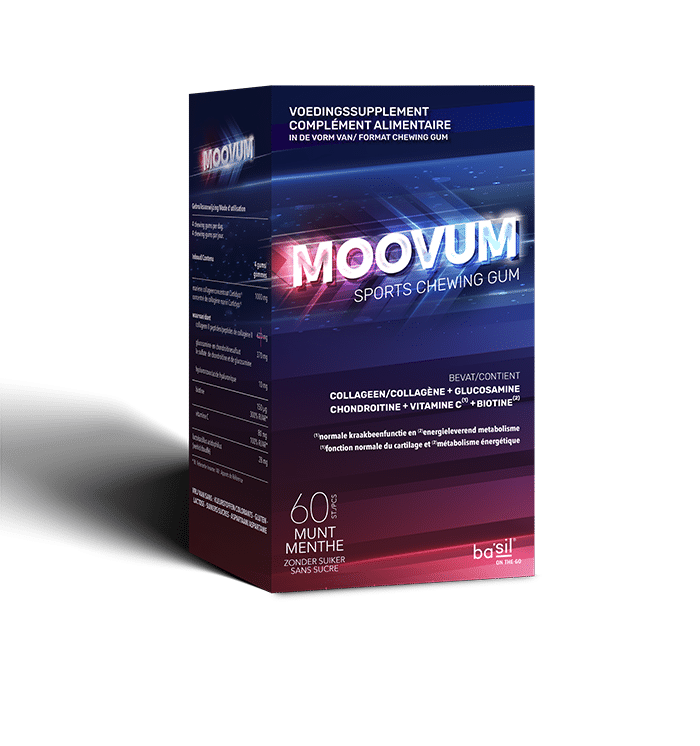
Moovum sports chewing gum
€30.00